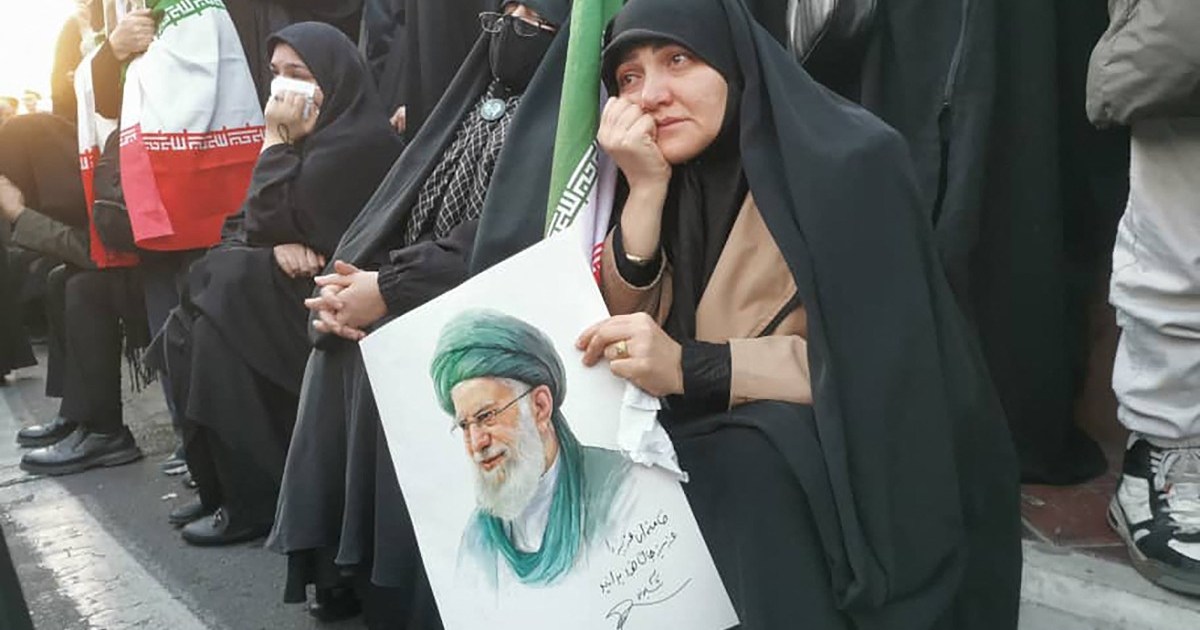
The Shifting Sands of Power: Khamenei's Vengeance Plan Encounters Unforeseen Obstacles
In the intricate and often opaque world of Iranian politics, whispers of Supreme Leader Ali Khamenei’s strategic intentions frequently spark intense global speculation. Recently, reports have emerged suggesting that a meticulously crafted "vengeance plan" attributed to Khamenei, purportedly designed to retaliate against perceived adversaries or to solidify regional influence, is facing significant headwinds. These setbacks are not merely operational but are reportedly rooted in challenges involving a pivotal top aide and the formidable Islamic Revolutionary Guard Corps (IRGC), casting a critical spotlight on the internal dynamics of Iran’s leadership. Understanding the complexities surrounding an influential
aide Khamenei vengeance strategy and its potential stumbling blocks is crucial for anyone monitoring the geopolitical landscape of the Middle East.
The concept of "vengeance" within Iran's political lexicon often transcends simple retribution. It embodies a deeper commitment to long-term strategic goals, aiming to restore perceived dignity, deter future aggression, or recalibrate regional power balances. Such plans are rarely impulsive; they are the culmination of careful deliberation, ideological conviction, and extensive resource allocation. When a plan of this magnitude, spearheaded by the Supreme Leader himself, reportedly encounters difficulties involving key executors, it signals potential shifts that could have far-reaching implications for both Iran's domestic stability and its foreign policy posture.
The Anatomy of a Vengeance Plan: Khamenei's Strategic Imperatives
For decades, Supreme Leader Ali Khamenei has been the ultimate arbiter of Iran's strategic direction, guiding the nation through turbulent geopolitical waters. His pronouncements and directives often shape Iran's responses to external pressures, from economic sanctions to military provocations. A "vengeance plan," in this context, could stem from a variety of perceived grievances:
* **Retaliation for Targeted Killings:** The assassination of key figures, such as Qassem Soleimani, has historically elicited strong vows of "harsh revenge" from Tehran.
* **Response to Cyber Warfare:** Frequent cyberattacks attributed to external powers often lead to calls for a robust counter-response.
* **Geopolitical Balancing:** Actions aimed at challenging perceived foreign interference in regional affairs or asserting Iran's influence.
* **Maintaining Deterrence:** Demonstrating resolve to deter future hostile acts against the Islamic Republic.
Such strategies are rarely isolated events; they are often part of a broader, multi-faceted approach involving diplomatic pressure, proxy engagements, and, when deemed necessary, direct action. The execution of such a plan, therefore, demands seamless coordination, absolute loyalty, and unwavering competence from the highest echelons of power. Any disruption in this chain of command, particularly involving an influential
aide Khamenei vengeance efforts rely on, or a core institution like the IRGC, can prove critical.
The Critical Role of a Top Aide in Khamenei's Inner Circle
In authoritarian systems, particularly those built around a supreme leader, the role of a top aide is indispensable. This individual is more than just an assistant; they are often a confidante, a strategic advisor, an executor of sensitive directives, and a primary channel for communication and intelligence flow. For Khamenei, whose authority is absolute, such an aide would likely be privy to the most sensitive deliberations and entrusted with highly classified operations.
A top aide's influence extends to:
* **Policy Formulation:** Assisting in drafting strategic responses and operational frameworks.
* **Implementation Oversight:** Ensuring that directives are executed effectively and as intended.
* **Information Management:** Filtering and presenting critical intelligence to the Supreme Leader.
* **Inter-organizational Liaison:** Bridging communication between various state bodies, including the IRGC, intelligence agencies, and the diplomatic corps.
The alleged setbacks involving such a crucial figure raise several pertinent questions: Is the aide experiencing internal dissent or disagreement with the plan's direction? Are there issues of competence or misjudgment? Or could external pressures or even subtle internal power struggles be at play, impacting their ability to effectively manage Khamenei's critical objectives? The integrity and reliability of this direct link to the Supreme Leader are paramount for the success of any high-stakes initiative. Any perceived weakness in this link could significantly undermine confidence and operational efficiency. It’s imperative for observers to consider how closely the fate of such a plan is tied to the actions and allegiances of a trusted confidante. For more insights into this specific dynamic, you might find valuable information in
Is Khamenei's Revenge Plan In Trouble? Aide & IRGC Boss.
The IRGC's Pivotal but Potentially Fractured Role
The Islamic Revolutionary Guard Corps (IRGC) is arguably the most powerful military and economic institution in Iran. Beyond its conventional military capabilities, the IRGC wields significant influence over Iran's economy, domestic security, and foreign policy, largely through its elite Quds Force. Any "vengeance plan" orchestrated by Khamenei would undoubtedly rely heavily on the IRGC for its execution, whether through covert operations, missile development, or proxy network mobilization.
However, even a force as formidable as the IRGC is not immune to internal challenges. Potential issues that could contribute to setbacks include:
* **Factionalism:** Different wings or commanders within the IRGC might hold differing views on strategic priorities or operational risks.
* **Corruption and Economic Interests:** The IRGC's vast economic empire, while a source of power, can also be a source of internal conflicts of interest or inefficiencies.
* **Operational Fatigue and Resource Strain:** Decades of engagement in regional conflicts and under sanctions might be taking a toll on personnel and resources.
* **Command Integrity:** Challenges to maintaining strict discipline and unified command across its diverse units, especially the Quds Force operating abroad.
If the IRGC, the primary instrument of state power projection, is facing internal rifts or operational hurdles, the grand designs of a leader like Khamenei are bound to falter. The success of a "vengeance plan" relies on seamless coordination between the Supreme Leader's office, guided by a key
aide Khamenei vengeance efforts leverage, and the boots on the ground provided by the IRGC. A disconnect or dysfunction here could be catastrophic. The implications of such internal IRGC dynamics on Khamenei's overarching objectives are profound. To delve deeper into these challenges, you might consider reading
Khamenei's Revenge Strategy Stumbles: Top Aide and IRGC Boss.
Unpacking the Setbacks: Geopolitical Implications and Internal Dynamics
The convergence of challenges involving a top aide and the IRGC in the context of Khamenei’s "vengeance plan" creates a complex web of implications. Such setbacks suggest that even in a highly centralized and ideologically driven system, vulnerabilities can emerge, impacting decision-making and operational effectiveness.
* **Reduced Strategic Efficacy:** If key personnel are compromised or internal divisions fester within the IRGC, the capacity to execute complex, sensitive operations effectively is diminished. This can lead to delays, operational failures, or even unintended consequences that further complicate Iran's strategic position.
* **Impact on Regional Influence:** A perceived stumble in a high-stakes "vengeance plan" could be interpreted by regional rivals and external powers as a sign of weakness or internal disarray. This might embolden adversaries or lead to a recalibration of alliances in the Middle East, potentially undermining Iran's long-term regional ambitions.
* **Domestic Ramifications:** Internally, any failure in a plan endorsed by the Supreme Leader could chip away at the regime's legitimacy and public confidence, especially amid ongoing economic hardships and social unrest. This could fuel further dissent and challenge the narrative of an unyielding and competent leadership.
* **Decision-Making Gridlock:** The interplay between a potentially compromised aide and a fractured IRGC could lead to decision-making paralysis or contradictory actions, making Iran's foreign policy less predictable and potentially more reactive.
**Practical Tips and Insights for Analysis:**
When analyzing such reports, it's crucial to look beyond the headlines and consider the interplay of several factors:
* **The Nature of Information:** Reports from inside closed systems like Iran are often deliberately vague or part of internal messaging strategies. Scrutinize sources and potential agendas.
* **The Power Dynamics:** Always consider the internal power struggles at play. Setbacks attributed to an aide or a specific IRGC faction might be leaks designed to weaken rivals.
* **The Broader Context:** These internal challenges occur against a backdrop of intense international pressure, sanctions, and regional rivalries, all of which can exacerbate or create internal vulnerabilities.
* **The Resilience of the System:** While facing setbacks, authoritarian regimes often possess a remarkable capacity for adaptation. It's important not to underestimate their ability to recover or shift strategies.
Understanding these underlying dynamics is essential for anyone seeking to grasp the real-world implications of internal challenges to a nation's foreign policy and strategic execution.
Conclusion
The reported setbacks to Khamenei's "vengeance plan," attributed to challenges involving a key
aide Khamenei vengeance strategy depends on and the powerful IRGC, underscore the inherent complexities and vulnerabilities within even the most centralized political systems. While the exact nature of these setbacks remains shrouded in the characteristic secrecy of Iranian politics, their implications are clear: any significant impediment to the Supreme Leader's strategic directives, particularly those involving core execution mechanisms, can profoundly affect Iran's domestic stability, regional standing, and international relations. As the geopolitical landscape continues to evolve, monitoring the internal health and cohesion of Iran's leadership—especially the critical roles played by trusted aides and the formidable IRGC—will remain crucial for understanding the trajectory of one of the Middle East's most influential nations. The ability of the regime to navigate these alleged internal challenges will be a telling indicator of its resilience and future strategic effectiveness.